
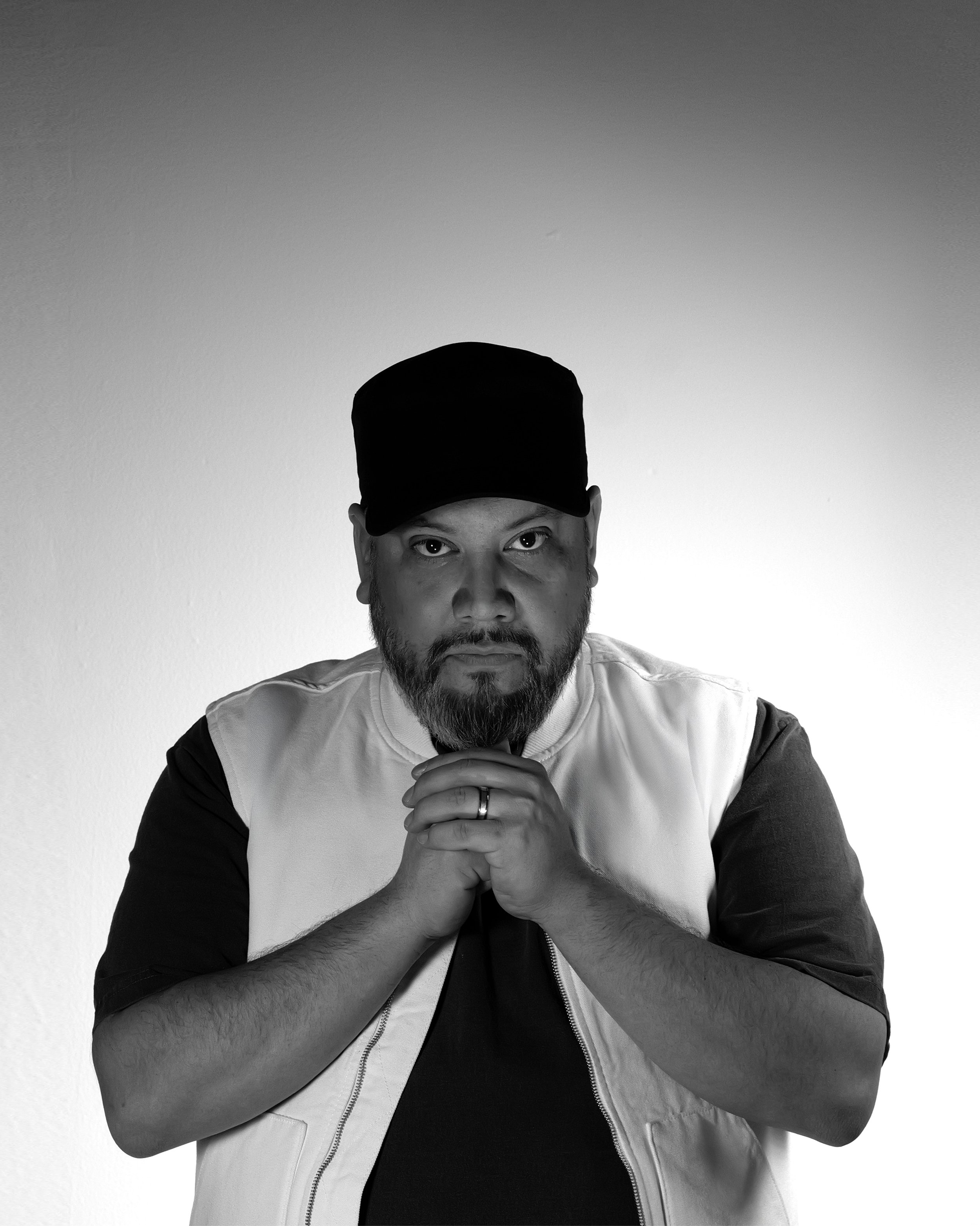
For over a decade, Shub (formerly known as DJ Shub) has been at the forefront of a movement that reshaped the landscape of Indigenous electronic music. A trailblazer who coined the powwow-step genre and a former member of the JUNO-winning A Tribe Called Red, Shub has spent years blending the ancient rhythms of powwow music with the pulse of modern beats, scratching, and bass-heavy production. With a new name and vision, Shub has stepped beyond the DJ booth, emerging as a composer, storyteller, and artist dedicated to expanding the read of Indigenous music on a global scale.
With Heritage, a two-part body of work and the most ambitious project of his career, Shub is making a statement not just about where he's been, but about where Indigenous music is headed. Whether through groundbreaking new music, creative collaborations, or advocating for the identity of his community, Shub's presence in the industry is a force of innovation, culture, and identity. “Heritage is about bridging generations,” Shub explains. “It’s about taking what our ancestors passed down and making sure it continues to evolve. Our culture isn’t stuck in the past, it’s alive, it’s powerful, and it belongs on the biggest stages in the world.”
Heritage (Part One) arrived as a stripped-down, raw statement of identity, shifting away from overt political messaging in favor of hard-hitting, celebratory rhythms that expanded Shub's sonic palette into hip-hop, '90s-era IDM, dub-infused trip-hop, and the heavy bass of drill. "My previous album War Club was like a weapon," Shub says. "Heritage is more about where I come from, bringing my culture forward, introducing it to new spaces, and showcasing who I am."
Heritage (Part Two) is the direct continuation of that vision, completing what Part One began. What started as a single album became something larger than expected: "In the beginning there was never a plan for a Part Two," Shub reflects. "Realizing the project needed to be split was the first real tough decision, but it ended up letting the music breathe and tell the full story instead of cramming everything into one release. The concepts and inspirations stayed the same the whole time, but the overall feeling became more complete once both records existed."
Where Part One laid the foundation, Part Two brings the full spectrum of Shub's sound into focus: electronic, hip-hop, and the powwow energy he grew up with, all coexisting without being confined to a single genre. "I wanted to make something that could live in a club, at a festival, or in someone's headphones and still feel authentic to who I am," he says. "This album is about movement and growth. It's not trying to be one genre, it's just the sound of where I'm at right now."
Central to Part Two are the collaborations, a bucket list brought to life, featuring artists including DJ Paul, Natasha Fisher, and more to be announced. "Hearing these artists step onto these tracks and take them somewhere I never could have on my own... that was the most rewarding part of making this record."
Taken together, the two parts of Heritage form a complete autobiography, one that, through the diverse backgrounds of its featured artists, becomes a celebration of unity across cultures and generations. "It's about cultures coming together through my music," Shub says. "If you can forget about everything else for a moment, take it in, and just feel free, that's the real beauty."
Shub's decision to drop "DJ" from his name reflects this same expansive evolution. When he first emerged in the turntablism and battle DJ scene, the moniker was a badge of honor. But as his sound grew, so did his artistry, from turntablist to producer and creator of cinematic sonic landscapes that fuse tradition with innovation. His logo echoes this transformation, honoring his Mohawk heritage with a Thunderbird design symbolizing strength, protection, and evolution.
Shub made his name after joining the JUNO-winning Indigenous electronic group A Tribe Called Red, playing a key role in defining powwow-step and producing the breakout track "Electric Pow Wow Drum" in 2013, a song that fused explosive EDM energy with the Indigenous rhythms he grew up with, amassing over 30 million global streams. After leaving the group, he released the PowWowStep EP in 2016, featuring the thunderous single "Indomitable," which Sacha Baron Cohen later used as the theme for his Showtime series Who Is America? — a show that earned three Emmy nominations and one Golden Globe nomination. In 2018, Shub composed the soundtrack for The Grizzlies, a Canadian sports drama about a lacrosse team formed to address a youth suicide crisis in Kugluktuk, Nunavut, winning Best Original Song at the Canadian Screen Awards for the title track.
His trademark sound was forged in Fort Erie, on the border between Ontario and Buffalo, New York, where Shub grew up as a Mohawk and a member of the turtle clan of the Six Nations of the Grand River. He came of age at socials, communal gatherings alive with the sounds and rituals of Indigenous culture, alongside his dad's Doobie Brothers records and his mom's Diana Ross, Donna Summer, and Michael Jackson. When he discovered electronic music, he realized that the typical tempo of a dubstep track, 140 BPM, mirrored that of the grass dance songs he'd heard at those gatherings. By combining the two, powwow-step was born. Before that, Shub had already built a reputation as a battle DJ, competing at the DMC World Championships and the Red Bull Thre3style DJ Competition. Several well-received singles and EPs followed, leading to his acclaimed 2020 debut album War Club. In 2022, Shub won the JUNO Award for Contemporary Indigenous Artist of the Year and performed on the live broadcast a milestone moment that reflected both his artistic growth and his growing role as an ambassador for Indigenous music on a national stage.
It's modern, it's raw, it's deeply rooted, and with Heritage Part One and Part Two, it's unmistakably Shub.